|  |  | 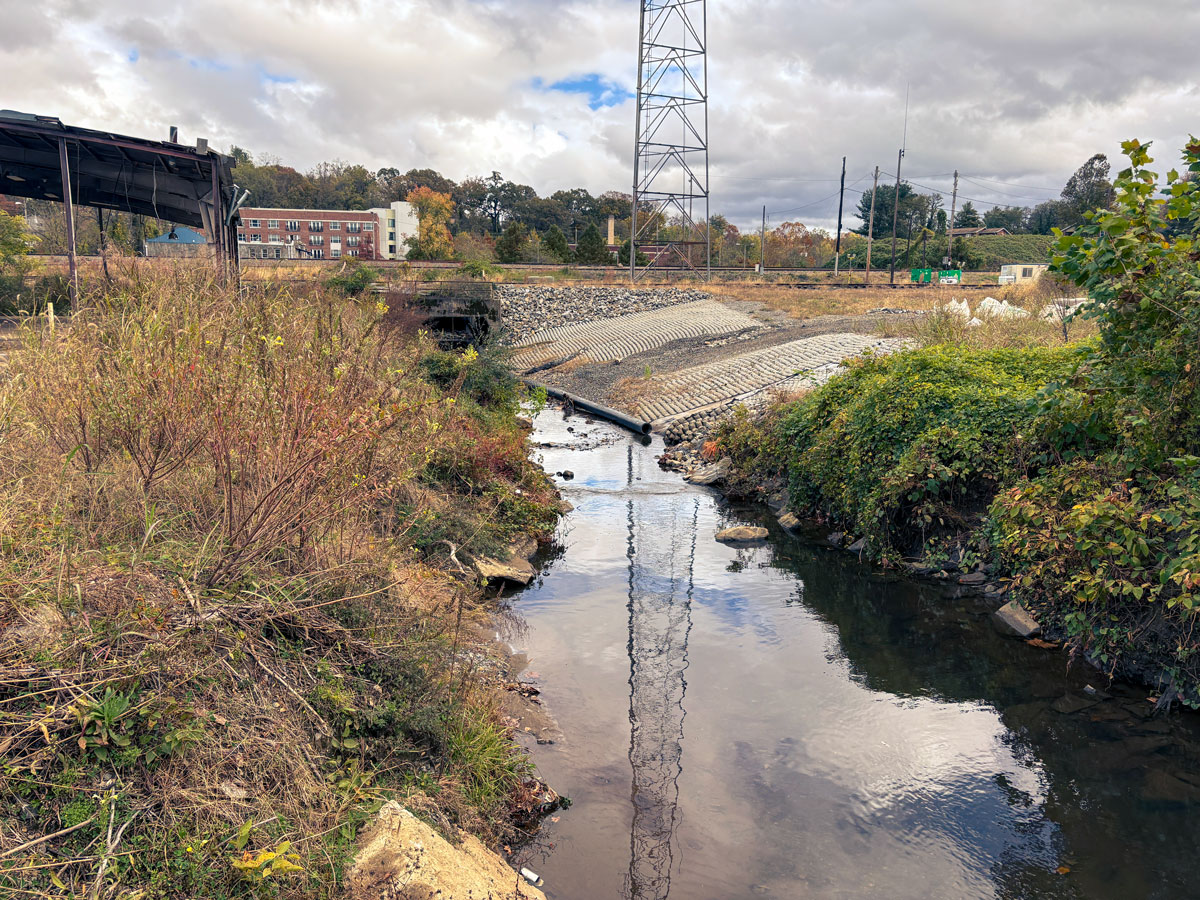 | Nasty Branch | A Name That Remembers, A Chance to Restore On the wooded slopes above downtown Asheville, freshwater springs converge to form Nasty Branch—an urban stream that flows largely underground before resurfacing as it passes through the historic Black Southside community and the River Arts District on its way to the French Broad River. Nasty Branch is one of Buncombe County’s most polluted streams, impacted primarily by urban stormwater runoff and the loss of riparian vegetation. Over the next few months, RiverLink will work with property owners to explore restoration opportunities along the stream. The first step will be completing a Basis of Design Report to guide future restoration and flood-resilience projects. The Basis of Design Report is an essential step that will strengthen future grant applications and accelerate long-needed restoration work along one of Asheville’s most culturally significant and environmentally challenged urban streams. |
| | |
|
|
|
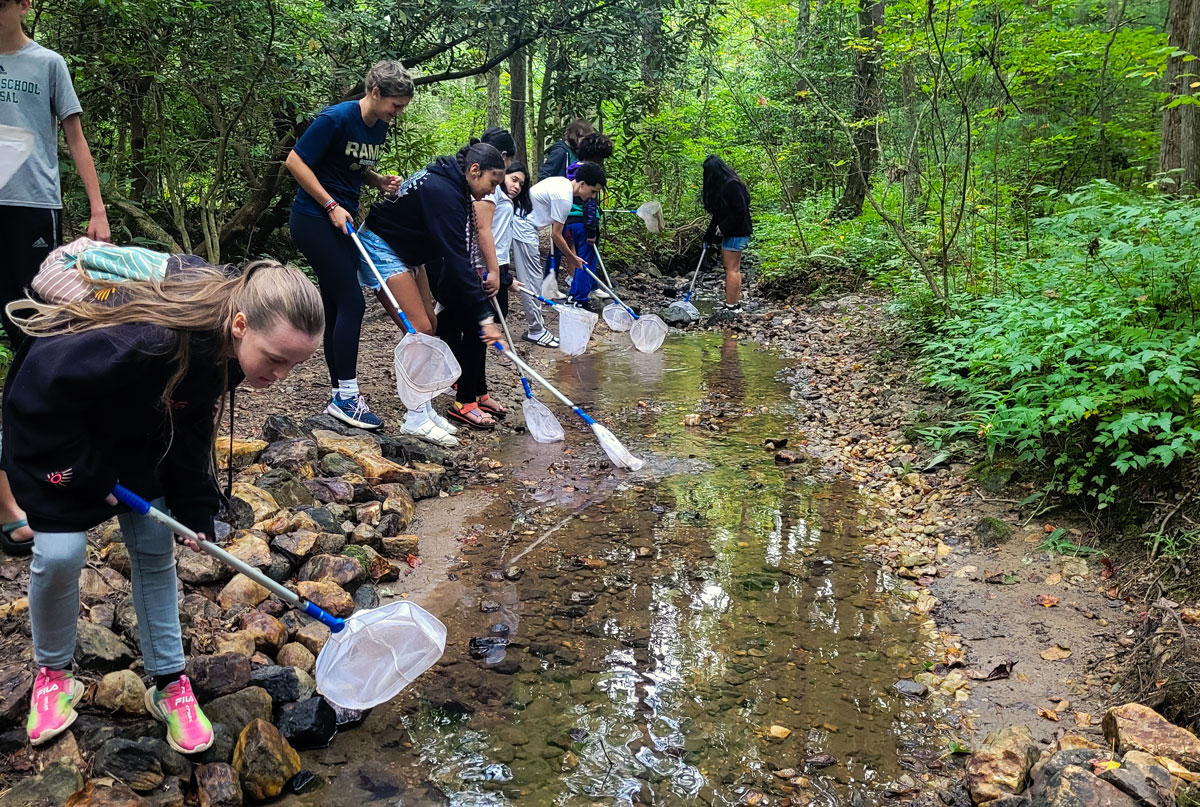
|  | 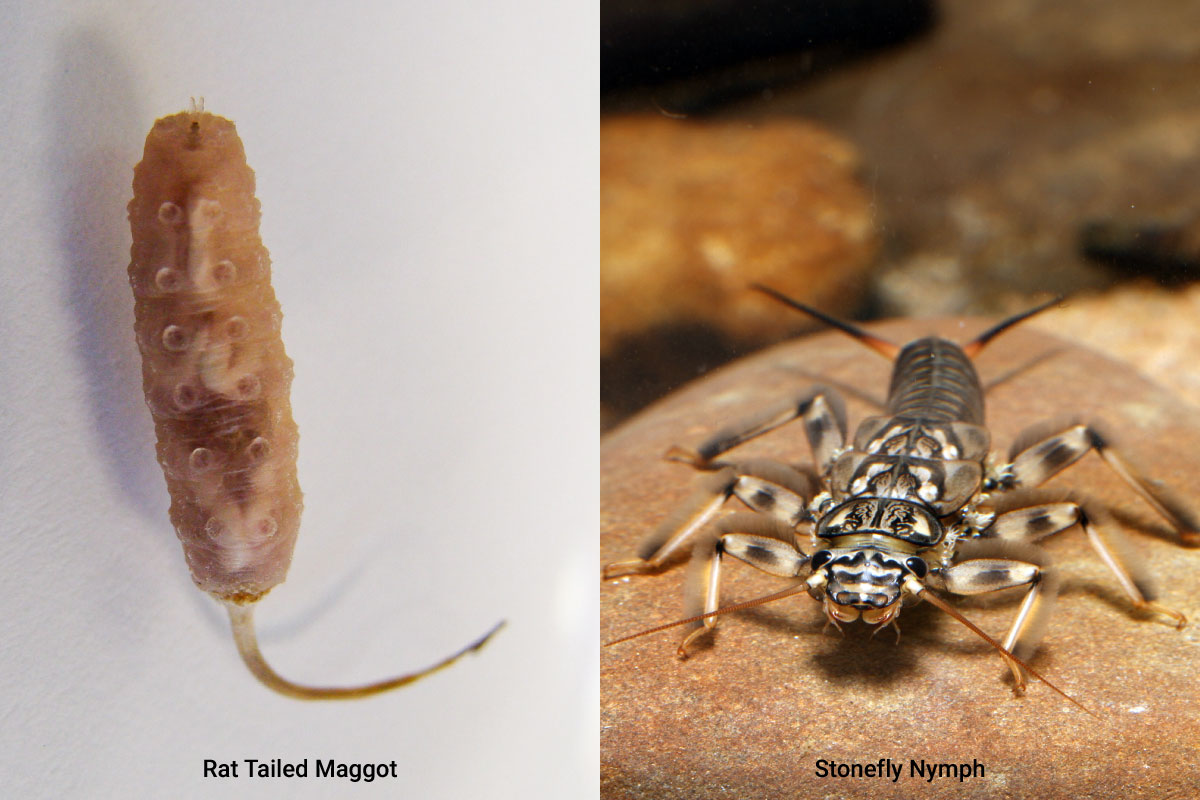 | The Good, The Bad, The Ugly | Bugs and Stream Health What if the tiniest residents of your local stream could tell you a big secret about their stream’s health? In fact, macroinvertebrates – the small creatures that inhabit freshwater – act as reliable bioindicators that reveal the health of our streams. A balanced, healthy stream supports many different kinds of organisms. When you find pollution-sensitive insects like the stonefly, it's a solid sign of good water quality and low levels of pollution. However, when waters receive an increase in pollutants or excess nutrients – where stormwater runoff delivers too much fertilizer, road salt, and other chemicals – the sensitive creatures disappear and those that remain are species tolerant of poor conditions. For instance, the rat-tailed maggot can survive in severely polluted, oxygen-depleted water, thanks to its “tail” which allows it to breathe air above the water’s surface. A greater diversity of organisms present tells us something of the stream's story. These are the stories young people explore as they become stream scientists for a day in one of our stream lessons. Who’s living in the stream near you? |
| |
|
|  | 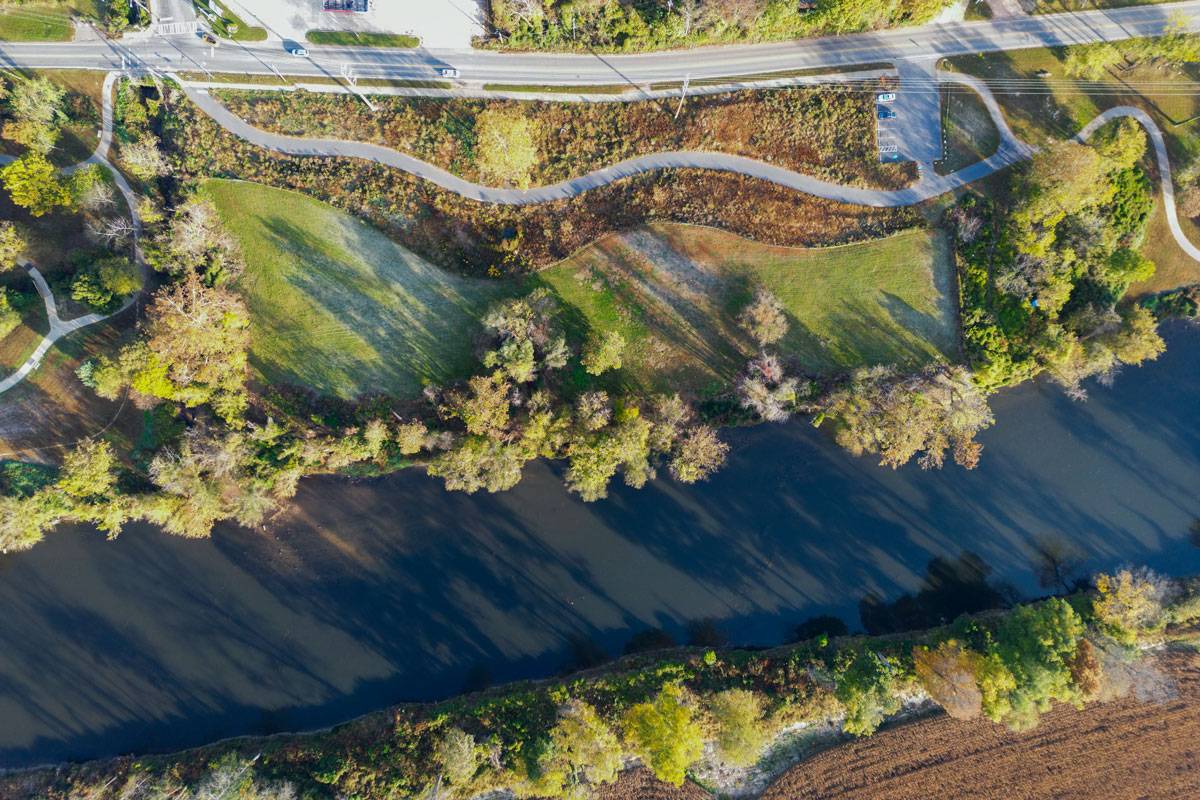 | Land in Hand, Water in Trust Alongside RiverLink’s robust Environmental Education and Watershed Resources programs, we are also proud to operate as an accredited land trust through the Land Trust Alliance—an effort carried out by our Land Resources Program. As part of this work, RiverLink holds and monitors conservation easements—voluntary legal agreements with landowners that permanently limit development and safeguard the conservation values of their land. We also own several properties throughout Asheville, including four sites that are managed as public parks or are preparing to do so. RiverLink is somewhat unique in the land trust world. We operate as an urban conservation land trust, focusing on the protection of smaller urban and semi-urban parcels. Our work as a land trust supports our overall mission because protecting land means protecting water. By prioritizing the conservation and restoration of properties adjacent to waterways, we restore streams, enhancing wildlife habitat and improving water quality. This includes both stewarding the lands we own and completing restoration projects that require long-term conservation easements once the work is done. Dealing in land has been a part of RiverLink’s identity since our founding in 1986, when Karen Cragnolin began re-imagining the French Broad River corridor and partnering with the City of Asheville to acquire land for future parks—sites like Carrier Park, Amboy Park, and French Broad River Park. In 2016, RiverLink became an accredited land trust, and we renew our accreditation regularly through an in-depth process that ensures we meet the highest national standards and that the lands we protect today will remain in good ecological condition forever. |
| |
|
|  |  | Together in Education | Appreciating Our 2025 Partners One of the most meaningful aspects of our education programs is that they remain completely free for every student and teacher we serve. We believe that learning about our streams, rivers, and the environments that sustain them should be accessible to everyone–regardless of background, income, or circumstance. That vision is only possible because of the dedicated partners who work alongside us. Whether by opening their classrooms and campuses to our team, collaborating with us to deliver hands-on environmental learning, or providing the financial support that keeps our programs free of charge, these partners make it possible for more than 5,000 students each year to explore, question, and connect with the waterways that shape our region. We want to extend our gratitude to some of these wonderful partners whose collaboration has helped make our education programs possible this year. We’re grateful as well to the many additional teachers, schools, organizations, and supporters who contributed to this work in meaningful ways: |
| - A.C. Reynolds Middle School
- Artspace Charter
- Asheville High School
- Asheville Middle School
- Black Mountain Elementary
- Blue Ridge RC&D
- Buncombe County Soil and Water
- Children First
- Erwin Middle School
- Estes Elementary
- Fred Anderson Subaru
- Hot Springs Elementary
- IRL “In Real Life”
- Isaac Dixon Bright Ideas
|
|
|
- Mountain Community School
- North Buncombe Elementary
- North Buncombe High
- Odyssey School
- OpenDoors Asheville
- Pisgah Investments Foundation
- Rainbow Community School
- Valley Springs Middle School
- Walnut Cove Members Association
- Weaverville Elementary
- WNC Nature Center
- WORX Project
- YMCA Horizons
- Youth Transformed for Life
|
|
|
| |
|
|  |  | Uisge Foundation | Water is Life All living things require water as an essential substance. Access to clean water is a basic human right and imperative to a healthy environment. RiverLink’s Watershed Resources program is grateful to receive financial support from Uisge Foundation, which works to ensure this fundamental right is upheld. Uisge (“OOish-geh”) is a Gaelic word meaning "water," where the common phrase uisge beatha means "water of life." (Pronunciation hint: Uisge is the origin of the English word "whiskey!”) This family foundation supports nonprofits engaged in community outreach, clean water projects and infrastructure, while underwriting disaster relief in the form of water access and water cleanup efforts. They also seek opportunities to support field experts working to raise awareness and employ innovative clean-water solutions that benefit human communities and the environment. Visit their website to connect and learn more. |
| |
|
| | Other News -
Join us for our upcoming volunteer day at Karen Cragnolin Park on Wednesday, December 3 from 10AM-12PM. Additional details can be found on our signup page. -
Our friends at French Broad River Brewery are hosting a Holiday Market featuring local crafters in their taproom, 11-4pm on Saturday, Dec. 13. Live music from 6-9pm from The Old Chevrolette Set. Free admission, and $1 of every pint sold will benefit RiverLink! -
Helene wasn’t the only superflood to strike in 2024, and the atmospheric origins of three similar storms are explained in arresting detail in this excellent episode of PBS’s Nova. We highly recommend this one if you haven’t seen it. -
Our friends at Permaculture Crossing have developed a series of Disaster Resilience Guides that growers and others may find helpful. Explore them here, and consider contributing to the series as it expands. -
The City of Asheville needs your input on their Urban Forest Master Plan! Here’s a short survey to help the City understand community priorities, values and concerns regarding our urban forest. |
| | Thanks for being part of our French Broad River community! |
| RiverLink promotes the environmental and economic vitality
of the French Broad River and its watershed. Please join us with a gift today! |
|
|
| | | |
|
|


