|  |  | 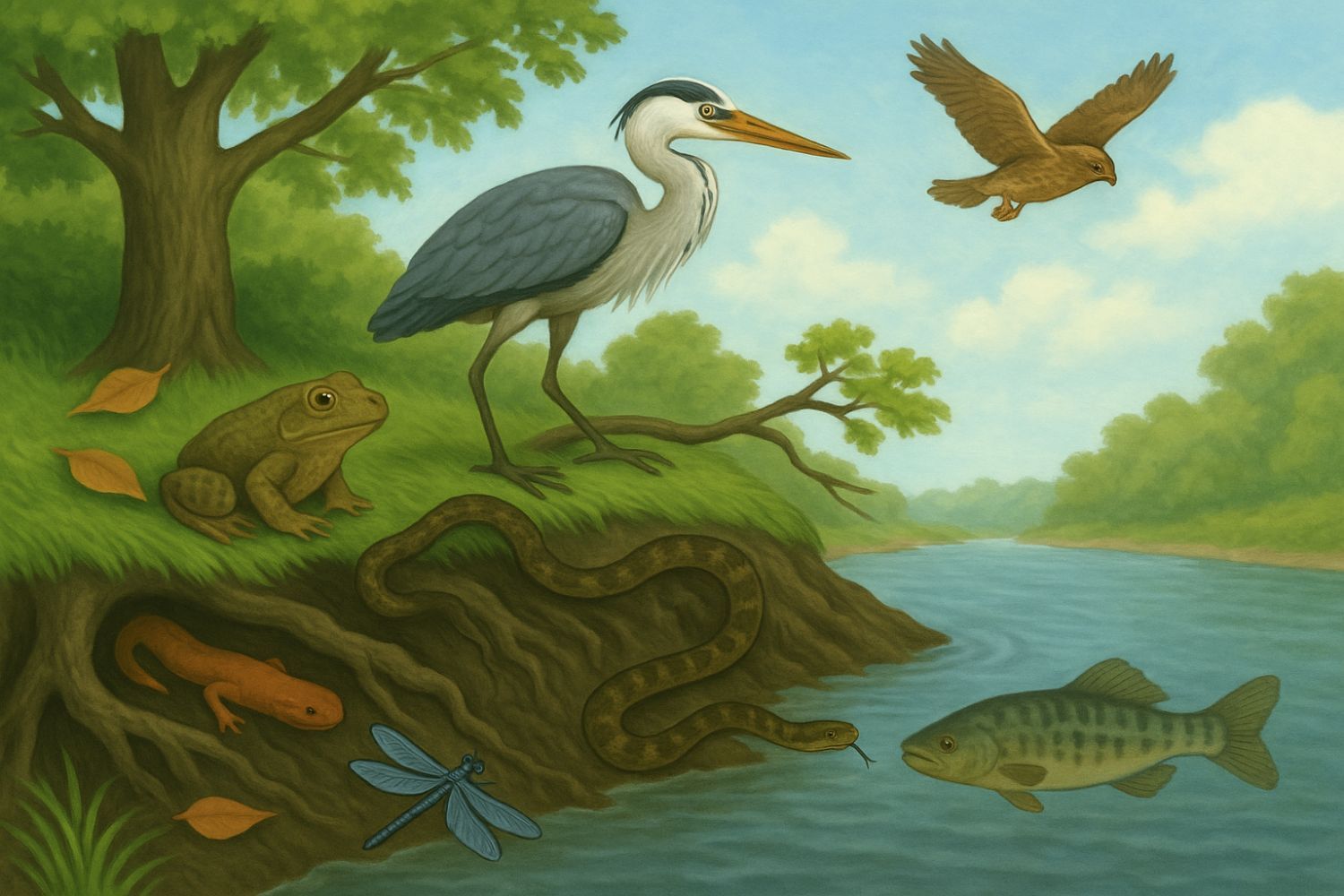 | Living Waters | Let’s Bank On It If you’re going with the flow, you’re bound to follow the bank – the stream bank that forms the edges of a stream channel. It’s a dynamic zone, shaped naturally by the water, plants, and animals that live there. Stream banks direct the flow of water and support a diversity of wildlife. Take a look at how various creatures may interact with this place. The roots of a tree hold the stream bank in place; its leaves fall into the stream becoming food and hiding places for aquatic insects that may be eaten by fish. The tree’s branches provide a perch for a Belted Kingfisher and a Great Blue Heron as they survey the water for their next meal. Nestled within the damp, stable conditions of a dead tree’s root ball, a salamander feeds on small insects and hides from potential predators. Without a sound, a common garter snake slides into the crevice and consumes the salamander. Later, as the snake returns to her den under a large, embedded rock, she becomes prey to a hawk who feeds her babies at the top of the tree. It’s the circle of life, where every member depends on access to clean water — and where many of us find peace in connecting with nature. There are 4,000 miles of streams in the French Broad watershed, and many miles of these streamside habitats were stripped of vegetation during Helene. Check out our recent video on how to revegetate a mild to moderately eroding stream bank. |
| |
|
|
|
|  | 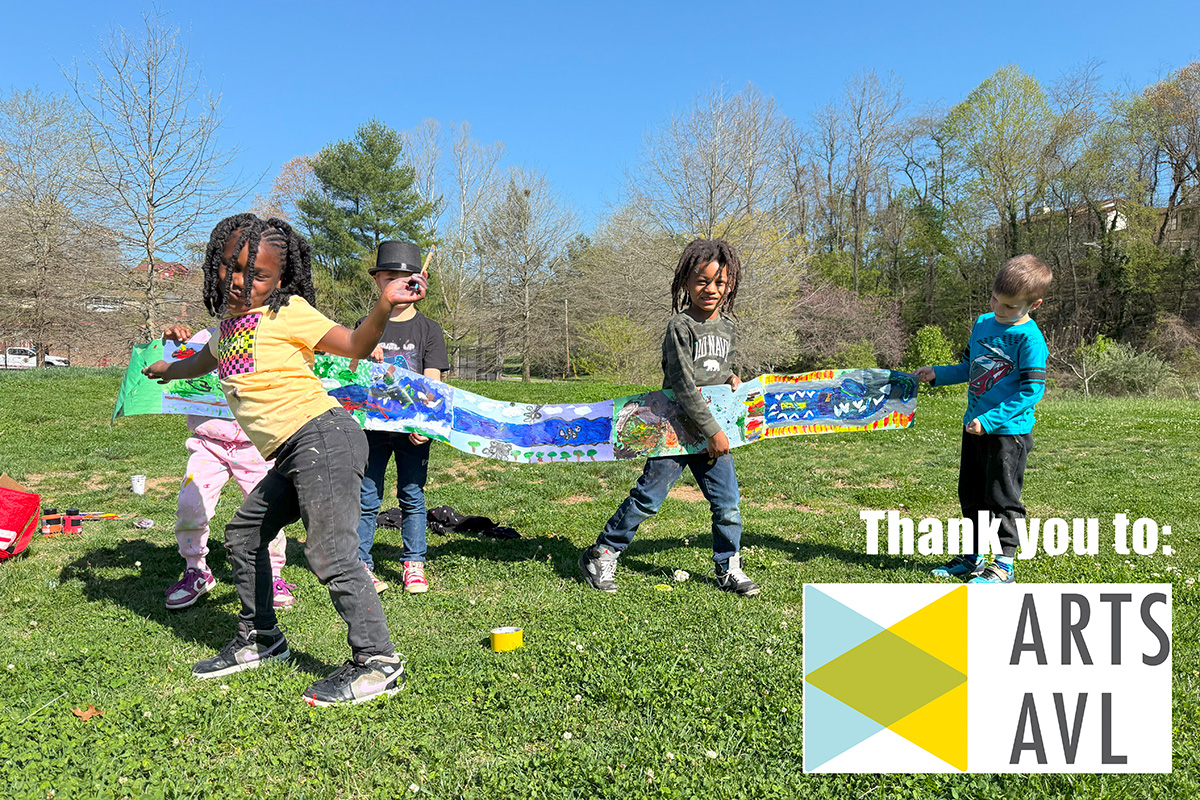 | Recovery Process | Nature-Based Art with Youth In the aftermath of Hurricane Helene, RiverLink's After School program turned to nature-based art to help students process trauma and reconnect with the natural world. From painting on downed wood to weaving wreaths from fallen pine boughs, students found comfort in creativity through therapeutic artmaking. These programs were made possible thanks to generous support from ArtsAVL through the Arts Build Community Grant, and we’re deeply grateful for their investment in student well-being and creative expression. Art therapy creates safe, empowering spaces for kids to process big emotions, especially after natural disasters. This work reminded us how healing it can be to make something beautiful from what the storm left behind. Read more about how art therapy supports emotional healing and explore nature-based art ideas you can try at home in our latest blog post. |
| |
|
|  | 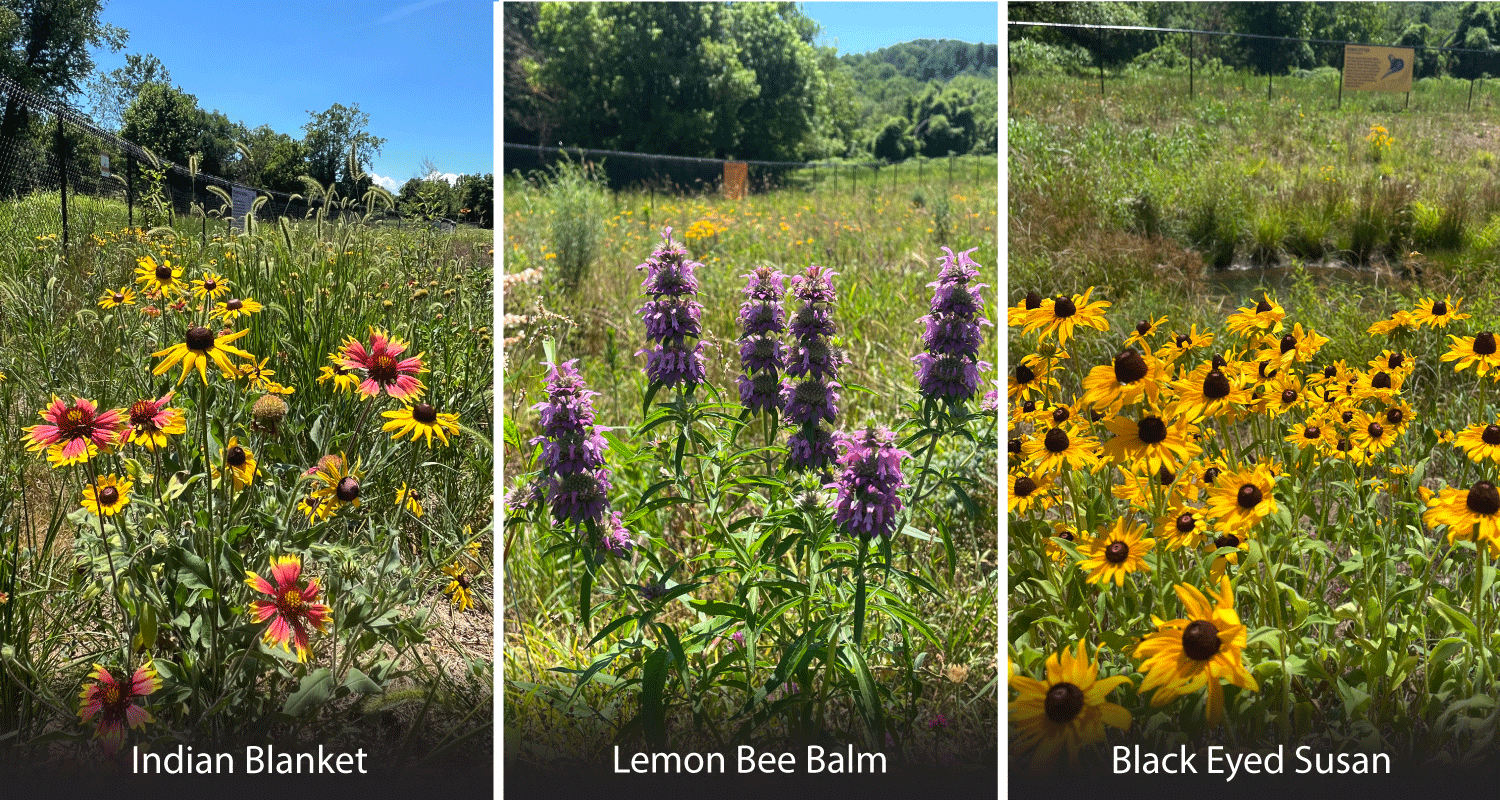 | The Meadow in May | Wildflowers at KCP RiverLink is creating what we believe is the largest public native meadow in Asheville at Karen Cragnolin Park. Wildflowers are beginning to bloom at the park, with more appearing daily. In the upcoming weeks, visitors can expect to see: - Lemon Bee Balm - These tall pink to purple flowers form columns, and their nectar can only be reached by long-tongued pollinators such as bees, butterflies, and hummingbirds.
- Black-Eyed Susan - These tall yellow flowers with black centers are a member of the aster family. Asters attract many insect pollinators of all sizes. The smallest pollinators also attract predatory dragonflies.
- Indian Blanket - This flower is one of the most abundant at the park. These bright red and yellow flowers are named for the red and yellow dyes that Native American blanket weavers often preferred. These flowers attract a wide variety of pollinators throughout the summer.
|
| |
|
|  | 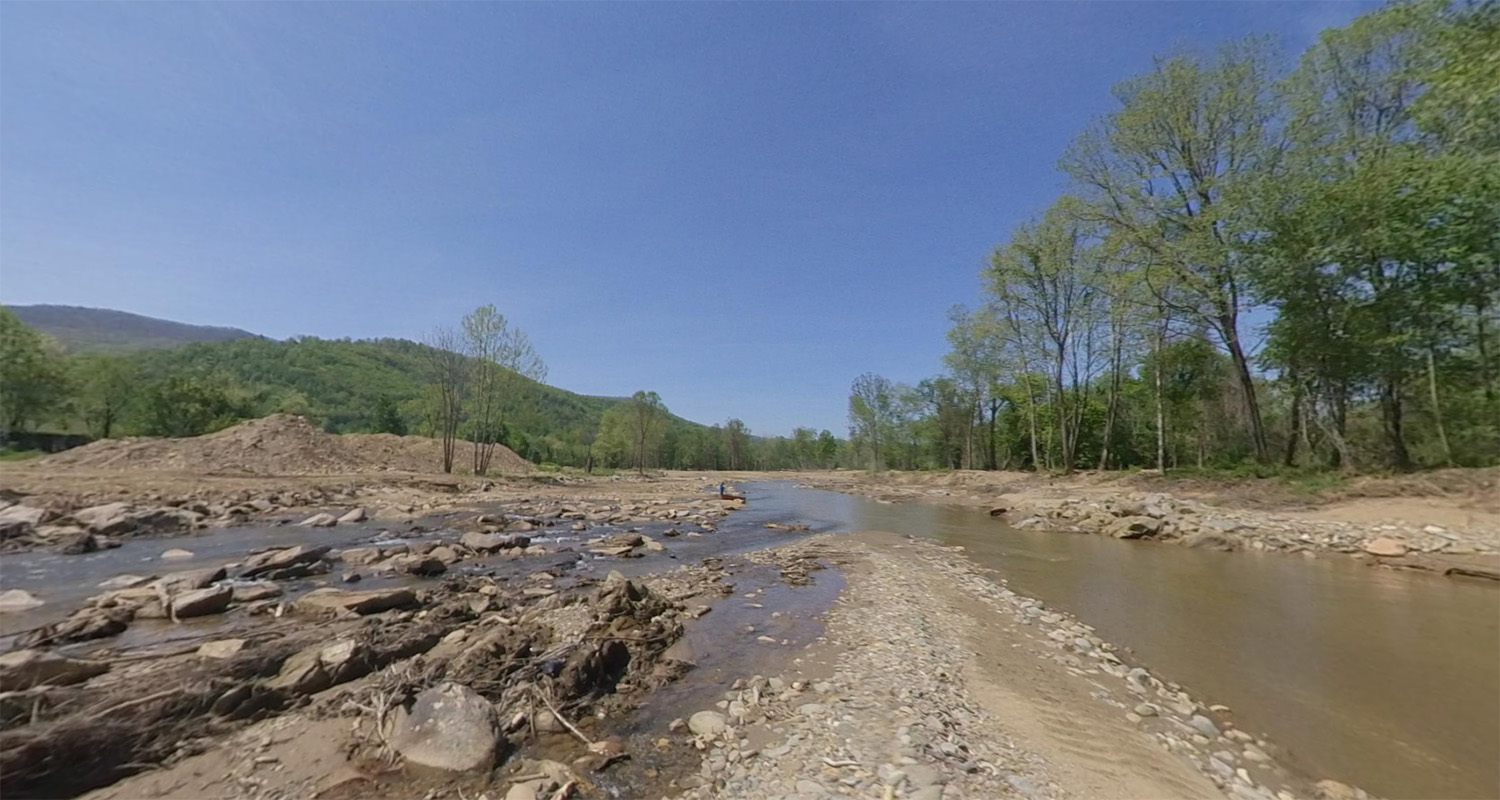 | Middle Swannanoa Evaluation and Assessment Work is underway on the Middle Swannanoa River Restoration Plan, focused on 6.6 miles of the Swannanoa from the outskirts of Black Mountain west to Warren Wilson College. With funding from the Community Foundation of WNC, RiverLink and Wildlands Engineering are mapping streambank damage to create a restoration plan that can be used to leverage funding for future implementation. If you live along this section of the Swannanoa and have streambank damage from Helene, fill out our survey to help us map affected areas and be considered for future grant opportunities. |
| |
|
|  |  | Huge Gratitude to Wildlands Engineering They say you know your true friends when disaster strikes. RiverLink is extremely grateful to our friends at Wildlands Engineering—a firm dedicated to creating ecological solutions through innovative engineering—for providing office space for eight months while our flood-damaged quarters in the RAD were restored after Helene. We’re finally heading back to Warehouse Studios on Lyman Street—touched by the generosity of the freshwater protection experts at Wildlands. Thank you, Jake McLean and team! |
| |
|
|  | 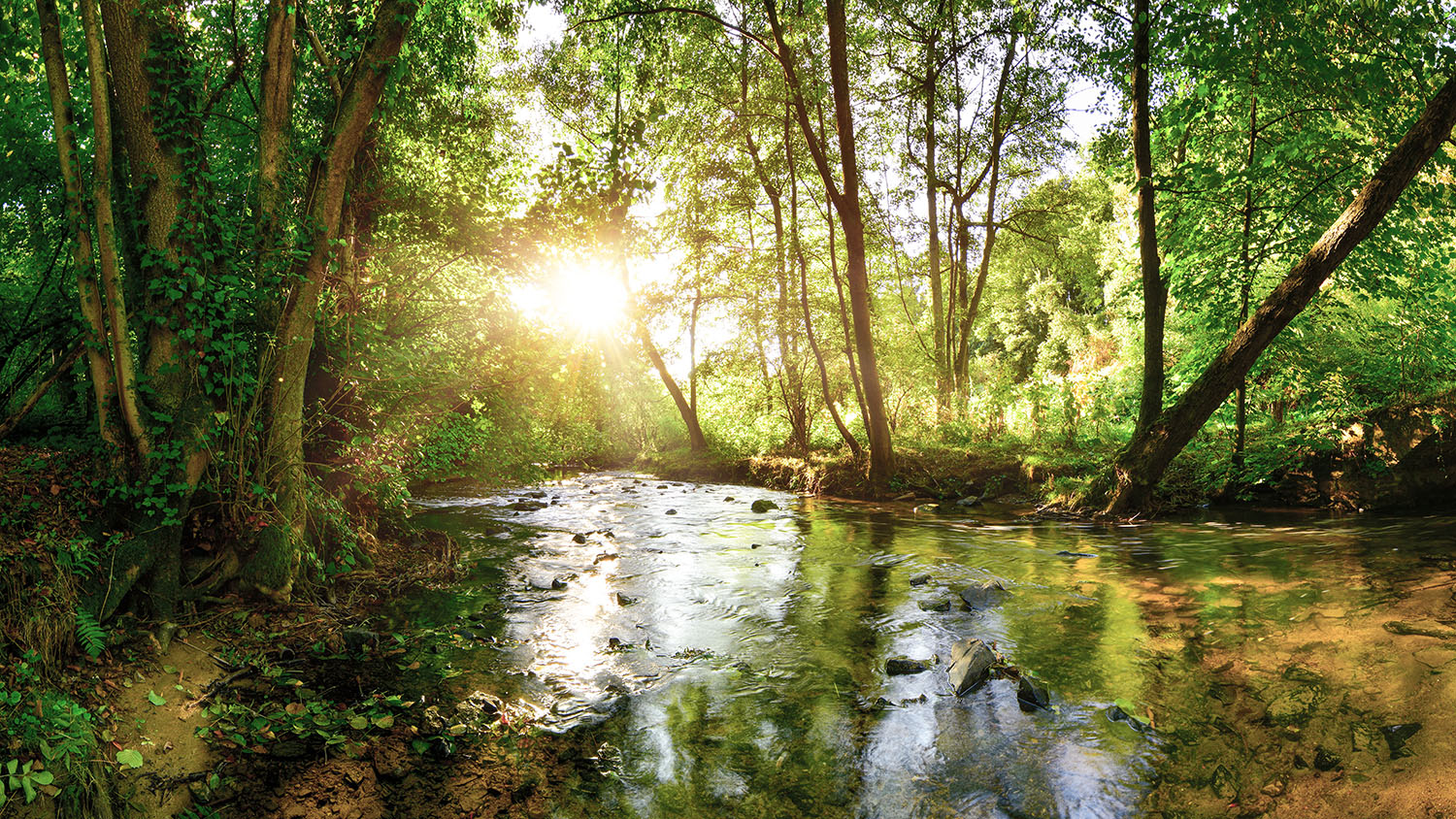 | Now, A Word From Mary Oliver The dream of my life
Is to lie down by a slow river
And stare at the light in the trees—
To learn something by being nothing
A little while but the rich
Lens of attention. Having paid attention, we return to our routines, appreciating the essential truth that our waterways connect us all. RiverLink is grateful for the support of individuals, foundations, and businesses who concern themselves with the health of the ancient French Broad River. We are energized as our friends pay attention—training your lens and committing your resources to the work of restoring and revitalizing our slow river, so that all may thrive along her banks. We look forward to kicking back by the river with you—as her restoration continues. |
|
|
| | Other News -
Please join us Tuesday, May 27th at New Belgium from 5:30 to 7 PM. RSVP here to secure your spot for a memorable evening of complimentary dinner, drinks, gospel music and good company at the GrindFest River Revival with RiverLink and our friends at Black Wall Street. Spots limited so please reserve today! -
A Toast to the French Broad: American Rivers has named the Rivers of Southern Appalachia, including the French Broad, among America's Most Endangered Rivers® of 2025. Please join us Thursday, June 12 as we co-host a social event at New Belgium Brewing to celebrate the French Broad River and share ways residents can take action for river protection. RSVP here -
We will continue to host public volunteer days in the coming months. Join us to remove invasives, plant natives and improve ecosystem diversity. Visit our volunteer page to view upcoming dates and sign up. riverlink.org/volunteer -
Free Half-Day Stream Bank Repair Workshop: NC State University and other local experts will provide practical, cost-effective solutions using natural materials and native plants to create healthy, stable streambanks and repair small scale repairs. Register Here! |
| | Thanks for being part of our French Broad River community! |
| RiverLink promotes the environmental and economic vitality
of the French Broad River and its watershed. Please join us with a gift today! |
|
|
| | | |
|
|


